


Essay No. 05
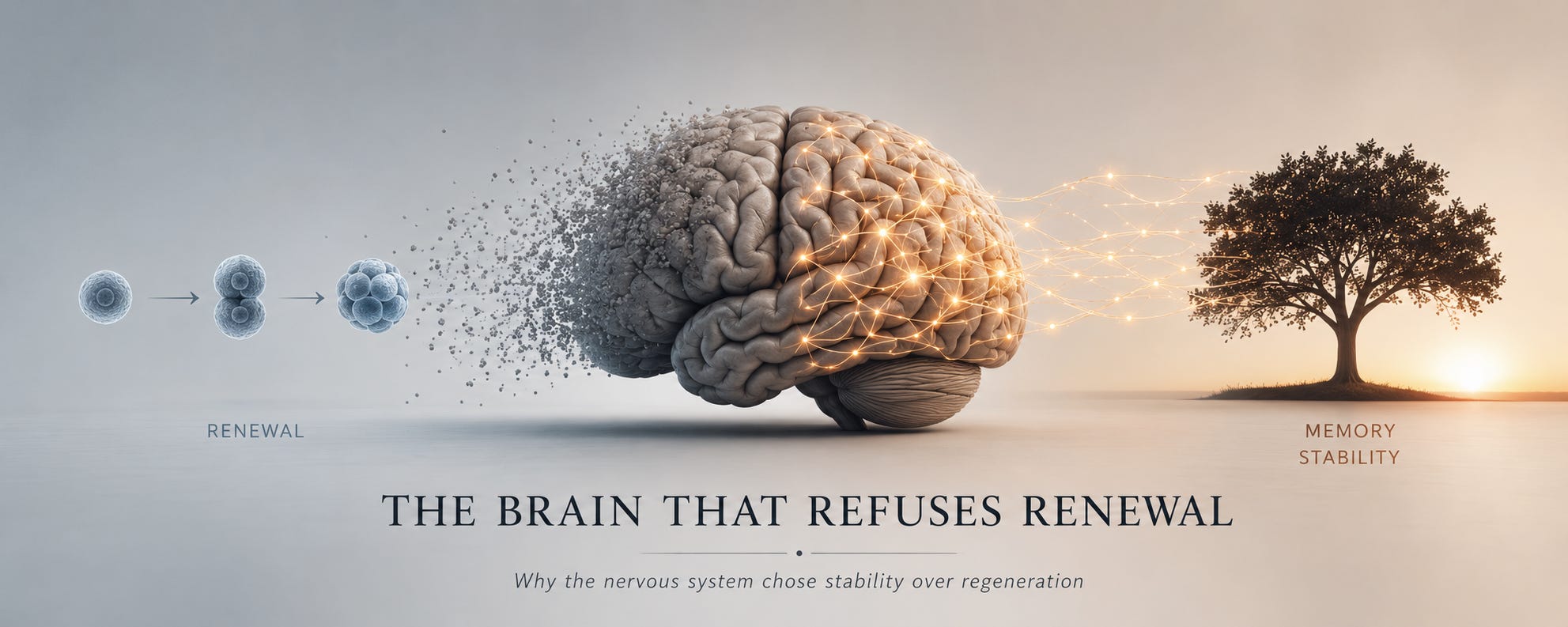
The Brain That Refuses Renewal

This essay explores why the mature nervous system appears to favor neuronal persistence over large-scale regeneration. It argues that the limited replacement of neurons may reflect not merely a biological limitation, but an evolutionary compromise shaped by the informational demands of memory, learning, and continuity. Unlike many tissues, whose function can often be preserved through cellular renewal, the brain depends on distributed patterns of connectivity and synaptic organization that accumulate experience across time. The concepts of neurotenacity and adaptive stability are proposed as frameworks for understanding how the nervous system preserves core architecture while remaining capable of plastic change. By examining regeneration, memory, neuroplasticity, neurological disease, aging, and neural preservation, the essay suggests that neuronal longevity may serve a protective role: sustaining the organized continuity through which experience, identity, and history remain biologically accessible.
Alexis O. Kaya, MD, PhD, Neuroscientist
Download