

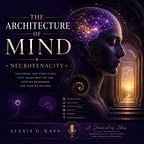

This article argues that the biological pursuit of immortality cannot be reduced to the extension of lifespan. Longevity medicine may preserve the organism, but the persistence of the self depends upon continuity: the preservation of memory, identity, experience, and the organized history through which a person remains recognizably themselves. The nervous system occupies a singular place in this problem because it gathers accumulated experience into living neural architecture and dynamic biochemical regulation.
The text distinguishes biological survival from personal continuity, showing that a body may remain alive while memory, personality, and autobiographical coherence gradually deteriorate. Neurodegenerative disease therefore becomes a decisive lesson: it reveals that preserving life is not always the same as preserving the person. The article also widens the argument beyond neural structure alone, emphasizing that continuity may require the preservation of neural function, chemistry, regulation, and the broader biological ecology through which experience remains possible.
The conclusion remains cautious but deliberately provocative. Neuroscience has not solved immortality, and it cannot yet determine what level of continuity is sufficient for the persistence of the self. Nevertheless, if radical continuity is biologically possible, the nervous system appears to be the most plausible place to begin. The first biological path toward immortality may therefore depend less on preserving the body indefinitely than on understanding and preserving the history carried by the nervous system.
By Alexis O. Kaya, M.D., Ph.D., Neuroscientist


